Saturday, February 24, 2007

Security scanner can see through clothes


PHOENIX - Sky Harbor International Airport became the country's first to begin testing a controversial new federal screening system that takes X-rays of passenger's bodies in an effort to find concealed explosives and other weapons.
The Phoenix airport started testing the new technology on Friday. It can see through people's clothes and show the body's contours with blush-inducing clarity.

Critics have said the high-resolution images created by the "backscatter" technology are too invasive. But the Transportation Security Administration adjusted the equipment to make the image look something like a line drawing, while still detecting concealed weapons.


Broadband Essentials by RealNetworks


During testing, the machine will be used only as a backup screening measure. Passengers who fail the standard screening with a metal detector will be able to choose between the new device or a pat-down search.

"It's 100 percent voluntary, so if the passenger doesn't feel comfortable with it, the passenger doesn't have to go through it,"
TSA spokesman Nico Melendez said.

Passengers selected for screening by the device are asked to stand in front of the closet-size X-ray unit with the palms of their hands facing out. Then they must turn around for a second screening from behind. The procedure takes about a minute.

"It seems faster. I'm not uncomfortable with it," said Kelsi Dunbar, 25, of Seattle, who chose the machine. "I trust TSA, and I trust that they are definitely trying to make things go quickly and smoothly in the airport.


Gate.com Hosting Banner


But one expert said the machine's altered image is ineffective, while the clear picture is an invasion of privacy.

"The more obscure they make the image, the more obscure the contraband, weapons and explosives," said Barry Steinhardt, director of the Technology and Liberty Project at the ACLU in Washington, D.C. "The graphic image is a strip-search. You shouldn't have to be strip-searched to get on an airplane. Millions of Americans would regard them as pornographic."

The machine will be tested for up to 90 days at a single checkpoint at Sky Harbor International Airport's largest terminal, which hosts US Airways and Southwest Airlines, the two busiest airlines in Phoenix.

The technology could be left in place after the trial period, and the TSA hopes to roll out similar machines at the Los Angeles airport and New York's Kennedy Airport by the end of the year.

The security officer who works with the passenger going through the screening will never see the images the machine produces. The pictures will be viewed by another officer about 50 feet away who will not see the passenger, the TSA said.


Click Here


The machine cannot store the images or transmit them and "once we're done screening the passenger, the image is gone forever," Melendez said.

He said the device at Sky Harbor costs about $100,000 but is on loan from the manufacturer, American Science and Engineering Inc. of Boston.

Monday, February 12, 2007

Yahoo to unveil mobile marketing platform


SUNNYVALE, Calif. - Yahoo Inc. (Nasdaq:YHOO - news) will sell branded advertising aimed at mobile phone customers outside the United States as part of the Internet powerhouse's efforts to build other revenue sources beyond the Web.

The new mobile marketing platform to be unveiled Monday will deliver image-based ads to mobile phones in Mexico, Canada and 16 other countries in Europe, Asia and parts of South America.

The Sunnyvale-based company launched a similar advertising push in the United States in November.

Yahoo said its expanded platform for image-based ads already has lined up commitments from several major advertisers, including Intel Corp., PepsiCo Inc. and Procter & Gamble Co.

Like its other Internet rivals, Yahoo is trying to develop more ways for advertisers to reach the billions of cell phones and mobile computing devices that have become staples of modern living.

Toward that end, Yahoo also is rolling out a series of upgrades to recently introduced applications designed to make it easier to find vital information on mobile devices without clicking through as many links as conventional searches on the Web require. The new features make it easier for users to share the results with others.

Yahoo said more than 100 mobile phones now support its so-called "oneSearch" application, up from about 70 different types a little over a month ago.

FREE Trial - Trust your most precious memories to SmugMug, upload your photos today.

Saturday, February 10, 2007

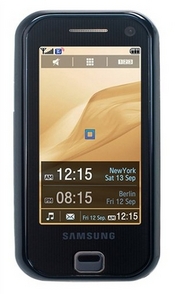
Samsung unveils iPhone-like cell phone


SEOUL, South Korea - Samsung Electronics Co. has unveiled a new mobile phone that features some of the sleek design and functions of Apple Inc.'s much-hyped iPhone.
Samsung's Ultra Smart F700 will be exhibited at next week's 3GSM World Congress, a telecommunications exhibition in Barcelona, Samsung spokeswoman Sonia Kim said Friday.

Mobile phone makers have been scrambling to match the iPhone, unveiled last month by Apple CEO
Steve Jobs. The device, which will be available starting in June, marks the iPod and
Macintosh computer maker's entry into the mobile phone business.

The ultra-thin iPhone is controlled by touching the screen a large touch screen, plays music, surfs the Internet, and runs a version of the Mac
OS X operating system, among other functions.

Samsung said the Ultra Smart F700 also has a full touch screen as well as a traditional QWERTY key pad that slides out "for users who are not yet familiar with a touch-screen-only user interface."

The phone can also access the Internet, play music, take pictures, show videos, handle e-mail and share photos, said Samsung, the world's third-largest manufacturer of mobile phone handsets.

Its third-generation (3G) technology is considerably faster than the iPhone's EDGE system, and its 5-megapixel camera outclasses the iPhone's 2-megapixel camera.

"The Ultra Smart F700 is a good example of how (the) mobile phone will evolve in the future," Choi Gee-sung, president of Samsung's Telecommunications Network Business, said in a statement Thursday.

Apple's iPhone will cost $599 for the high-end model.

Kim, the Samsung spokeswoman, said marketing plans for the Ultra Smart F700 remain unclear because the company wants to see what kind of reaction it receives at the Barcelona show.

Last month, Samsung rival LG Electronics Co. announced its own touch-screen mobile phone, the KE850 Prada.

The LG phone, produced in partnership with the Italian fashion brand, is to go on sale in late February for $780 at mobile phone dealers and Prada stores in Britain, France, Germany and Italy. It is to be launched in Asia in March.

Tuesday, January 30, 2007

Cabling Installation & Maintenance Magazine

Solutions for Premises and Campus Communication Systems Worldwide.

Cabling Installation & Maintenance provides information to industry professionals involved in the purchase, design, installation and maintenance of premises and campus-wide cabling systems.

Geographic Eligibility: USA, Canada

Publisher: PennWell
Qualify for Your Free Subscription!

Wednesday, December 06, 2006

Cell phones for the holidays


No longer is the cellular phone selection limited to the RAZR, a $500 Treo and hundreds of look-alikes and act-alikes. Recent months have brought a wave of new devices that stand apart from the pack in terms of looks and next-generation features.
Dominating the new crop is a widening array of BlackBerry-like "smart" phones designed to be more consumer-friendly in function and price. As compared with the $300 to $500 traditional price tag for higher-end devices, these handsets are debuting at $200 with a two-year contract.

More than ever, thin is also in, with the carriers offering a growing number of slenderized clamshell and candy-bar phones. Yet despite the shrinking size, phones are coming with more built-in bells and whistles: external memory slots for storing music and photos, higher-resolution cameras and high-speed Internet capabilities.

A sampling of notable new handsets:

Cell Phone Flashing Light Antenna 80% off


BlackBerry Pearl from T-Mobile and Cingular Wireless

The first BlackBerry targeting the consumer market, the Pearl is the first with a digital camera (1.3 megapixels), an MP3 music player and a memory slot. Just 2-inches wide and weighing 3.2 ounces, the Pearl's narrow QWERTY keyboard features two letters per key, relying on predictive software to suggest and choose the desired letter. A glowing navigational trackball — dubbed the Pearl — on the front replaces the signature side track wheel on other BlackBerry models. ($349.99 to $399.99 list price, depending on carrier, $199.99 with contract commitments and rebates)


Hot new phones!


LG "enV" from Verizon Wireless

The enV, also called the VX 9900, is a slimmer and lighter upgrade to the "V," a clamshell that opens to reveal a spacious QWERTY keyboard and dual speakers on the sides of a wide screen. Though a smidge longer and wider than the V, the enV is almost a quarter-inch thinner at 0.78 inch deep and half an ounce lighter at 4.6 ounces. The enV also features GPS satellite navigation and a higher-resolution 2 megapixel camera. ($319.99 list price, $129.99 with two-year agreement and $50 rebate)

___

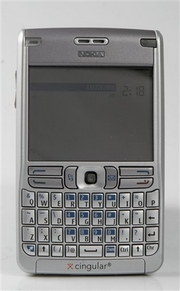
Nokia E62 from Cingular Wireless

The E62 is the first mass-market smart phone based on the Symbian operating system offered in the United States. There's a heavy focus on e-mail through multiple applications. It also features a full-QWERTY keyboard and an external memory slot, but no camera. The E62 is "quad-band" compatible with four common wireless frequencies for overseas roaming. ($349.99 list price, $99.99 with two-year contract and rebate)


Find loads of great softwares at Youpark that...


Motorola KRZR K1m from Verizon Wireless, Sprint and Alltel

An offshoot of the sleek RAZR line, the KRZR is a third of an inch smaller from side to side compared with its famous cousin, though a tad thicker, taller and heavier. Unlike the RAZR, the KRZR features external music controls. The version of this handset currently available in the United States also features a 1.3 megapixel camera, a memory slot and GPS location tracking. A version sold overseas and expected to be offered by other U.S. carriers next year has a 2 megapixel camera. ($349.99 to $399.99 list price, depending on the carrier, $199.99 to $249.99 with contract commitments and rebates)

___

Motorola ic502 from Nextel

The first dual-network phone since the merger of Sprint and Nextel, the ic502 offers Nextel subscribers decent wireless Internet speeds for the first time using Sprint's network. It also provides access to Nextel's hugely popular walkie-talkie services. The GPS-enabled handset is built to military specifications to withstand rugged conditions. While it doesn't sport a camera and other consumer-ish features, the higher data bandwidth is a major upgrade from the sub-dialup speed of other Nextel phones. ($249.99 list price, $59.99 with mail-in rebate and two-year contract)

___

Palm Treo 680 from Cingular Wireless

The first Treo targeting the consumer market, the 680 is slightly slimmer in size and far more slender in price than its predecessors. This QWERTY-keyboard device runs on the Palm platform and features a new 5-button "quick launch" toolbar on the touch screen. An ounce lighter than the pricier Treo 700, other physical distinctions include an internal antenna and a memory slot on the side. On the downside, the 680 has a lower-resolution camera and doesn't connect with Cingular's speedier data network. ($449.99 list price, $199.99 with two-year contract and rebate)

___

Samsung BlackJack from Cingular Wireless

A small and sleek handset packed with high-end features, the Windows-based BlackJack is less than half an inch thick and weighs 3.5 ounces. Features include high-speed "3G" Internet access and a choice of navigation with either a front four-way key or a thumb wheel on the side. There's also a full-QWERTY keyboard,1.3 megapixel camera and external memory slot. It's quad-band compatible with four common wireless frequencies for overseas roaming. ($449.99 list price, $199.99 with two-year contract and rebate)

___

Samsung M610 from Sprint

Billed as the thinnest clamshell phone in the United States, the M610 is just 0.47 inch thick, or about a tenth of an inch thinner than the RAZR. It's also about a fifth of an ounce lighter at 3.28 ounces. Perhaps more importantly, it connects with Sprint's broadband-speed Power Vision network. Other features include a 2 megapixel camera, external memory slot and GPS location tracking. ($329.99 list price, $179.99 with two-year contract)

___

Samsung Trace from T-Mobile

At just 0.3 inch thick, the Trace is a new slimness champ among "candy bar" (non-flip) phones. Despite the small size and weight — 2.5 ounces — the phone offers an unusually large screen and multimedia features: 1.3 megapixel camera, MP3 music player and external memory slot for storing pictures and music. ($199.99 list price, $99.99 with two-year contract)

___

Sidekick 3 from T-Mobile

The newest addition to the popular Sidekick family is about 20 percent smaller than its predecessor and features a new trackball for one-handed navigation. Other improvements on the SideKick 2 include the addition of an MP3 player, external memory slot, and a removable battery. ($479.99 list price, $249.99 with two-year contract)

___

T-Mobile Dash

A cellular and Wi-Fi smart phone running on Windows Mobile. Features include a full-QWERTY keyboard, 1.3 megapixel camera, external memory slot, Windows Media Player Mobile. The phone also offers quad-band compatibility with four common wireless frequencies for overseas roaming, and an internal Wi-Fi antenna to connect to the Internet over a home or public wireless network (such as T-Mobile Hotspots at Starbucks and other retail locations). ($349.99 list price, $199 with a two-year contract)

Thursday, November 16, 2006

Watch cable TV on your cell phone? Soon

NEW YORK - Embracing a technology that has unnerved media and telecommunications companies, a major European wireless provider will let customers watch their home cable TV on a cell phone if they also have a device called the Slingbox back at the house.

3 Group will launch the new service in Britain first, starting Dec. 1, followed by three more of its 11 markets in early 2007, the wireless company announced Thursday.

Two new handsets running on 3's next-generation wireless network will feature the Sling application, which customers can use to watch any channel available on their cable TV at home. The phones also can be used to control a digital video recorder at home, pausing and rewinding live television, playing previously recorded shows, or setting up the DVR to record a program.

The partnership with 3 is a watershed for Sling Media Inc., the first sign of official recognition from the industry "establishment" for a renegade device that the California-based company began selling a year ago. The Slingbox, hooked up simultaneously to a set-top cable box and a broadband connection, can stream live and recorded video over the Internet to any laptop or handheld equipped with SlingPlayer software.

The gadget is the latest in a line of devices that have reshaped the way people watch television over the past few decades.

Before the VCR, catching a TV show required viewers to conform to a schedule set by networks. More recently, digital video recorders such as the TiVo made it possible to skip commercials and even rewind a live program. Now devices and software like the Sling not only make it possible to watch TV anytime but also anywhere.

But much as TV networks and movie companies initially questioned the rights of viewers to record their content on a TiVo, they also have objected to the notion that monthly cable fees paid by subscribers entitle them to view cable programming in more than one location.

In the case of TiVo, however, cable companies quickly moved past their objections and began offering DVRs of their own to customers, generating new revenue.

Slingbox presents a potential problem not only for the media companies that own the content, but for phone and cable companies worried that streaming video and other high-bandwidth uses may clog their networks — while generating no extra revenue for them.

In the United States, for example, Verizon Wireless and other cellular companies put clauses in their contracts restricting the way subscribers can use their wireless Internet connections on phones and laptops.

3, a unit of Hong Kong-based Hutchison Whampoa Ltd., plans to offer Sling access as part of a premium service called X-Services, though usage will not be unlimited. Details of the pricing and additional fees for extra bandwidth use were not immediately available.

The British version of the Slingbox sells for 180 pounds ($340). The first two 3 handsets loaded with the SlingPlayer software will be the Nokia N73 and the Sony Ericsson w950i. Prices weren't disclosed.

3 also didn't say where it would offer Sling next. It has upgraded its wireless network with the required broadband technology in Italy, Australia, Austria, Sweden, Denmark, Hong Kong, Israel and Ireland.

Sunday, October 01, 2006

Thai crown princess launches royal blog


BANGKOK, Thailand - In a country where the royal family rarely communicates directly with the public, Thai Crown Princess Maha Chakri Sirindhorn could be considered a trailblazer.
The 51-year-old princess launched on Saturday the country's first royal blog, which she says is aimed at persuading her fellow citizens to embrace English.

"We have witnessed in this past century that English has become a global language without much understanding of the process," she wrote. "Nor can we say that we really know the extent of its influence and status as the global language. But we can be sure of one thing: English can be used as a key to better understanding."

The blog appears on the British Council's Web site.

The only other royal in Asia known to have a Web log is Cambodia's former King Norodom Sihanouk. His blog contains thousands of commentaries on anything from Hollywood stars to the rough-and-tumble of Cambodian politics, along with historical documents and exchanges with diplomats or Cambodian politicians.

The princess is admired in Thailand for her charity work and her common touch.

Royal watchers said the Thai princess's blog was not that surprising, given that she is known to be tech-savvy and routinely e-mails intellectuals in the region.

Her blog is a continuation of the British Council's efforts to improve the teaching of English in Thailand. Earlier this week she presided over a two-day conference titled "Policy for Global Transition" jointly hosted by the British Council and the Thai Ministry of Education.

It wasn't clear if the princess would be updating her blog, and the British Council could not be reached for additional comment.

Prof. Thitinan Pongsudhirak, political scientist at Chulalongkorn University, said that by adding her voice to the campaign, the princess had greatly bolstered the council's efforts.

"Her patronage has given the project a lot more prestige. Her avid pursuit of the arts is a great inspiration to young people in Thailand," he said.

___

On the Net:

Crown Princess Maha Chakri Sirindhorn's blog: http://access.britishcouncil.or.th/

Wednesday, March 29, 2006

GM Warns It May Not Be Able to Sell Stake

DETROIT - General Motors Corp. warned it may be unable to sell a majority stake in its finance division, in an annual report Tuesday that highlighted the myriad risks and financial woes confronting the world's largest automaker

GM has been counting on the sale of a 51 percent stake in General Motors Acceptance Corp. as a way to separate the division's debt rating from GM's own junk rating and raise as much as $15 billion in badly needed cash for the struggling automaker. But GM warned anew Tuesday that a deal may not happen.

"We are uncertain at this time if any transaction with respect to GMAC ... will occur or, if any transaction were to occur, on what terms," GM said. GM added that even if a transaction is completed, it's possible GMAC's credit rating could still hinge on GM's.

GM had hoped a new parent for GMAC would bring investment-grade credit ratings to the finance business, which was slashed to junk status last year alongside its sliding automotive parent. It was those ratings that caused GM to consider the planned sale, which was announced in October.

In the filing, GM also discussed the threat of a strike at supplier Delphi Corp. that could cripple GM.

The automaker also restated financial results from 2000 through 2004 because of a litany of accounting errors. GM had said March 16 that it was delaying filing its annual report because of an internal investigation into those errors.

Also Tuesday, GM said it is restating financial results for GMAC from 2003 through the third quarter of 2005. The restatement relates to the improper classification and presentation of cash flows for certain mortgage loans.

GM said it had concluded an internal investigation into Residential Capital Corp., GMAC's mortgage subsidiary, and determined that cash flow relating to certain mortgage activities was inappropriately classified.

The changes reduced operating cash flows but increased investing cash flows between 2002 and the first three quarters of 2005, the automaker said. GM said the restatement doesn't affect the income statements or net cash flows of GM, GMAC or ResCap.

GM also said it began investigating errors in the way it booked credits from suppliers, including Delphi, last April after getting a subpoena from the Securities and Exchange Commission. The SEC, which was seeking information on retroactive price adjustments GM had received from Delphi, is continuing to investigate GM and its suppliers.

GM said it erroneously booked supplier credits as a reduction of cost to sales between 2000 and 2004. After restatement, a deferred credit of approximately $548 million existed as of December 2004, which will be recognized as a cost of sales in future periods, the automaker said.

Burnham Securities analyst David Healy said GM's restatements were largely housekeeping measures that will have no effect on GM or GMAC's cash flow.

"If it wasn't GM in crisis mode and the whole feeding frenzy going on in the media, a small restatement like this wouldn't get any attention," Healy said.

But Healy said it was important for GM to get its finances straightened out in preparation for the possible GMAC sale. The filing "removes a minor burden" to the sale, Healy said.

Credit ratings agencies have said that they would probably lower GMAC's ratings closer to those of GM if the stake in the finance division isn't sold. Those lower ratings would dramatically raise the cost of funding for GMAC, as well as severely impede its access to capital.

If no sale occurs, GM said, "GMAC's access to capital may be seriously constrained, as most unsecured funding sources may decline, including bank funding."

The cost of secured funding may also rise without the sale.

A higher cost of funding would "significantly lower earnings and dividends," the filing said. "GMAC may need to consider divesting certain businesses in order to maintain adequate liquidity," the filing continued.

GM lost $10.6 billion in 2005, largely due to declining U.S. sales and rising costs. The company is in the midst of a restructuring plan and on Tuesday announced it was laying off several hundred salaried workers. GM also has offered buyouts to all of its 113,000 U.S. hourly workers in the hopes of cutting its hourly work force by 30,000 by 2008.

GM shares fell 1.7 percent in late-session trading on the news. Earlier, the stock dropped 18 cents to close at $22.75 on the New York Stock Exchange.